Methodology Work Services Writing Make Me Think Book Methods Guide Notes Blog
Design grounded in how people decide

Perception-First
Design

Remove the perception barriers that stop interested visitors from becoming buyers.

The Framework

Five layers between a visitor and a sale.

  1. Layer 0. Cognitive Load. Reduce decision fatigue. Less thinking, more action.
  2. Layer 1. First impression. The brain decides in 50 milliseconds. Trust forms before content loads.
  3. Layer 2. Processing fluency. Easy to process reads as trustworthy.
  4. Layer 3. Perception bias. Design for behavior, not stated preference.
  5. Layer 4. Decision architecture. Structure choices to guide action.
The methodology as artifacts

The full framework is open-sourced and written up. Read it, run it, or both.

Open source

Claude Code skill

The full PFD framework as an AI skill. Run perception audits in your own workflow.

View on GitHub →
Book · Free

Make Me Think

12 chapters on why your visitors aren’t thinking. And what to do about it.

Read the book →

You’re losing sales to perception, not product.

Your product works. Your pricing is competitive. But your visitors aren’t evaluating your design. They’re not reading your copy. They’re pattern-matching, filtering, deciding. All before conscious thought kicks in.

50 milliseconds. That’s how long the brain takes to form a first impression. Your site is being judged by cognitive processes your visitors can’t articulate and you can’t see.

Most sites are built around what the business wants to say. The visitor’s brain is asking a different question: does this feel right? That judgment happens before logic.

Perception-First Design closes that gap.

Psychology-Informed Web Design Framework

Five layers. One goal.

Layer Principle Research Base Causal Chain
Layer 0: Cognitive Load Reduce decision fatigue Sweller (1988) Less thinking → more action
Layer 1 Design for 50ms judgments Lindgaard et al. (2006) Trust forms before content loads
Layer 2 Easy to process = trustworthy Reber & Schwarz (1999) Fluent design → perceived credibility
Layer 3 Design for behavior, not stated preferences Kahneman (2011) Emotional resonance → action
Layer 4 Structure choices to guide behavior Sunstein & Thaler (2008) Clear path → completed purchase

See the full framework with all citations: PFD Reference →

Layer 0: Cognitive Load

Don't Make Me Think

“Can’t perceive anything without the bandwidth to do so.”

Cowan’s research shows working memory holds 3 to 5 chunks, not Miller’s famous 7. Every unnecessary element on your page is stealing from that budget.

Recent research adds a second path: when intrinsic interest is high enough (Dodson’s Interest-Based Nervous System: passion, novelty, challenge, urgency), it can override load ceilings. Cognitive load is not just “reduce friction.” It is “reduce friction or increase the reason to push through it.”

In practice: reduce choices at each step, show only what’s needed now, use smart defaults for 80% of users, and eliminate unnecessary fields, steps, and decisions.

Causal chain: Fewer choices → less mental effort → faster decisions → more conversions.

Simply Smart Home: Site presented “very matter-of-fact statements and not much else.” Users had to work to figure out what the product did or why they’d want it. Restructured content to answer the questions users actually have: what is this, who is it for, why should I care. Before they have to ask.

Read more: Cognitive Load →

Read the mechanism

Content coming soon. See the complete reference for the full mechanism description.

Layer 1

First-Impression Architecture

“Users form first impressions the same way on sites as they do with people in real life, and you have a split second to make your best one.”

You have 50 milliseconds to pass the “is this trustworthy?” test. The threshold isn’t world-class. It’s “not sketchy.” If your site triggers the alarm, they’re gone before conscious thought kicks in.

Hero sections that immediately communicate value. Strategic use of faces, the only thing humans pattern-recognize from birth. Visual quality consistent with price point. Color and typography that signal the right personality.

Causal chain: Faces in hero → instant pattern recognition → positive emotional response → trust established before thinking begins.

Simply Smart Home: Added smiling faces in hero product graphics: smart frames displaying family photos. Faces are the only thing humans pattern-recognize from birth. Drove direct conversions and brand awareness; visitors felt warmth, not “another gadget.”

iO Theater: Hobbyist WordPress site triggered the “this doesn’t look like a real theater” alarm. Clearing that perception barrier alone moved online ticket sales from 50% to 75%.

Read more: The 50-Millisecond Verdict →

Read the mechanism

Content coming soon. See the complete reference for the full mechanism description.

Layer 2

Processing Fluency

“They wouldn’t take this business seriously because they don’t do so on their website.”

Reber and Schwarz showed that experiences which feel easy to process are judged as more trustworthy, more beautiful, and more true. Fluency is not simplicity. It is cognitive ease.

Clean typography with adequate contrast. Predictable layouts that match mental models. Unified branding and collateral. No mixed signals.

Causal chain: Unified branding → feels professional → perceived as trustworthy → clears the “would I buy from this?” bar.

Simply Smart Home: Basic template, no branding system, $150+ price point. Customers “wouldn’t take this business seriously.” Created unified brand system and style guide. Perceived quality matched price point. Price objections decreased, vendors became more interested.

Competitor insight: “Aura frames put weights in their frames to make them feel less cheap and charge more.” Perception of quality is manipulable.

Read more: The Feeling of Truth →

Read the mechanism

Content coming soon. See the complete reference for the full mechanism description.

Layer 3

Perception Bias Optimization

“Protect the customer from internal stakeholder preferences.”

Design for how people actually behave and feel, not what they say or what features do. Research behavior, not stated preferences. Find the emotional core: what do they feel after using this?

Audit messaging: is it feature-focused or outcome-focused? Compare survey data vs. analytics. The gap is where perception bias lives.

Causal chain: Emotional tagline → connects to real desire → resonates with target customer → action.

Simply Smart Home: Marketing focused on screen resolution, WiFi, app features. Workshopped the team through “what does this product actually do for the user emotionally?” Discovery: it’s about connection, not technology. Tagline: “Stay connected, even when you’re apart”, which Aura later stole. Best validation possible.

Read more: The Gap →

Read the mechanism

Content coming soon. See the complete reference for the full mechanism description.

Layer 4

Decision Architecture

“They’re hunters looking for prey, and it’s my job to make a trail for them.”

Structure choices to guide behavior. Navigation should reflect user goals, not org charts. Make the desired path the obvious path.

Strategic default selections. Show the premium option first so the standard feels like a deal. Reduce choice paralysis through smart categorization. Put your CTA where decisions naturally happen.

Causal chain: Clear path → user finds goal → reduced friction → purchase completed.

Simply Smart Home: Homepage “didn’t answer any of the user’s questions, goals, or form a good impression.” Rebuilt as a trail: visitor lands → sees emotional hook (faces, connection) → understands product → sees social proof → clear path to purchase.

Read more: The Trail →

Read the mechanism

Content coming soon. See the complete reference for the full mechanism description.

These five layers draw from two largely distinct bodies of cognitive science: perception psychology and ADHD cognitive neuroscience. Connected here for the first time. The full citation set and layer mapping are in the complete reference.


Ethics and Limits

Every persuasive technique has a shadow side.

Perception-First Design uses the same cognitive science that powers dark patterns. The difference is intent and transparency. I make my persuasive mechanisms visible, not hidden.

Processing fluency

Making things easy to understand is not the same as making them easy to accept uncritically. I design for clarity, not for bypassing judgment.

Decision architecture

Structuring choices to guide behavior is not eliminating choice. I preserve user autonomy. No hidden options, no false urgency, no confirmshaming.

Perception bias

Designing for how people perceive is not exploiting how they misperceive. I align design with genuine value, not manufactured signals.

What I refuse

Fake countdown timers. Hidden unsubscribe flows. Confirmshaming copy. These aren’t conversion optimization. They’re manipulation, and they erode the trust PFD is designed to build.

Limitations & ongoing research: PFD’s evidence base draws on strong lab research (processing fluency, 50ms impression formation, cognitive load theory) and practitioner observation across 15 years and dozens of engagements. The five-layer synthesis itself is practitioner-derived, not independently validated as a complete system. Cultural generalizability beyond Western markets remains an open question. I state this because intellectual honesty is a stronger authority signal than overclaiming.

Case Studies and Results

Same products. Different perception.

Revenue 3x

Simply Smart Home

Repositioned “digital photo frames” as smart home décor. New brand system, packaging, web presence. Same hardware. Revenue tripled within the year.

“Stefan designed the brand, the packaging, and the product. Everything people see.”
Revenue 4x

Vacuum Sealers Unlimited

Ten years, same site. Incremental optimization, no redesign. The methodology compounds.

“The website Stefan built me helped put my 3 boys through college.”
50% → 75%

iO Theater

Online ticket sales for a 40-year Chicago improv institution. Built in half the time of the agency they hired before.

“Stefan made our site in half the time, and even better looking than the agency we hired before him.”

Retail placement & licensing

Costco Walmart Target Amazon Disney Kohl's The Home Depot Wayfair Staples QVC Brookstone Army & Air Force Exchange Lowe's
Origin

I figured out my design methodology in a nightclub.

I started as a barback at a nightclub in Santa Barbara, working nights to pay for school. After a month, my boss chewed me out based on one bad-looking moment during a rush. I pushed back professionally. The next night he promoted me to security manager. That was the first time I consciously identified a perception gap: his impression didn’t match reality, and my response addressed the perception, not the facts.

Three years managing that door taught me that people decide whether to trust an environment in milliseconds. Before they read the drink menu. Before they hear the music. Something in the lighting, the crowd density, the staff posture either passes their unconscious trust check or it doesn’t.

When I moved into web design, I recognized the same dynamic. Visitors aren’t reading your copy in their first 50 milliseconds. They’re running the same unconscious trust audit they’d run walking into a bar. My psychology degree from UC Santa Barbara, where I focused on cognitive psych, gave me the science. The nightclub gave me the instinct. Perception-First Design™ is both.

I have ADHD. The cognitive constraints I designed around (limited working memory, sensitivity to disfluency, impatience with unnecessary friction) are constraints every user has. Mine are just louder. A design that works for the constrained case tends to work better for everyone. Researchers call this the curb-cut effect. I call it the reason the methodology works.

Read the full origin story: Chapter 1: The Bouncer →

Common Misconceptions

Five things to get straight.

  • “Make it pretty” won’t get you there. Visual polish without perception strategy is decoration. Looks don’t convert. Cleared perception barriers do.
  • Generic UX best practices fall short. “Add more whitespace” and “make the button bigger” are tactics without strategy. This framework explains why certain changes work and others don’t.
  • It won’t manufacture demand. This converts existing interest into action. If nobody wants your product, fix the product first.
  • Not perfectionism. “Good enough” is a feature, not a bug. The goal is clearing the trustworthiness threshold, not winning design awards.
  • Every engagement is custom. Each principle requires understanding your specific customer. The hunters are different; the trail must match what they’re hunting for.
Methodology Tools

Where the methodology lives.

The tools demonstrate the methodology. They are not the product.

[Co]

Spatial Canvas

AI Workflow Orchestration

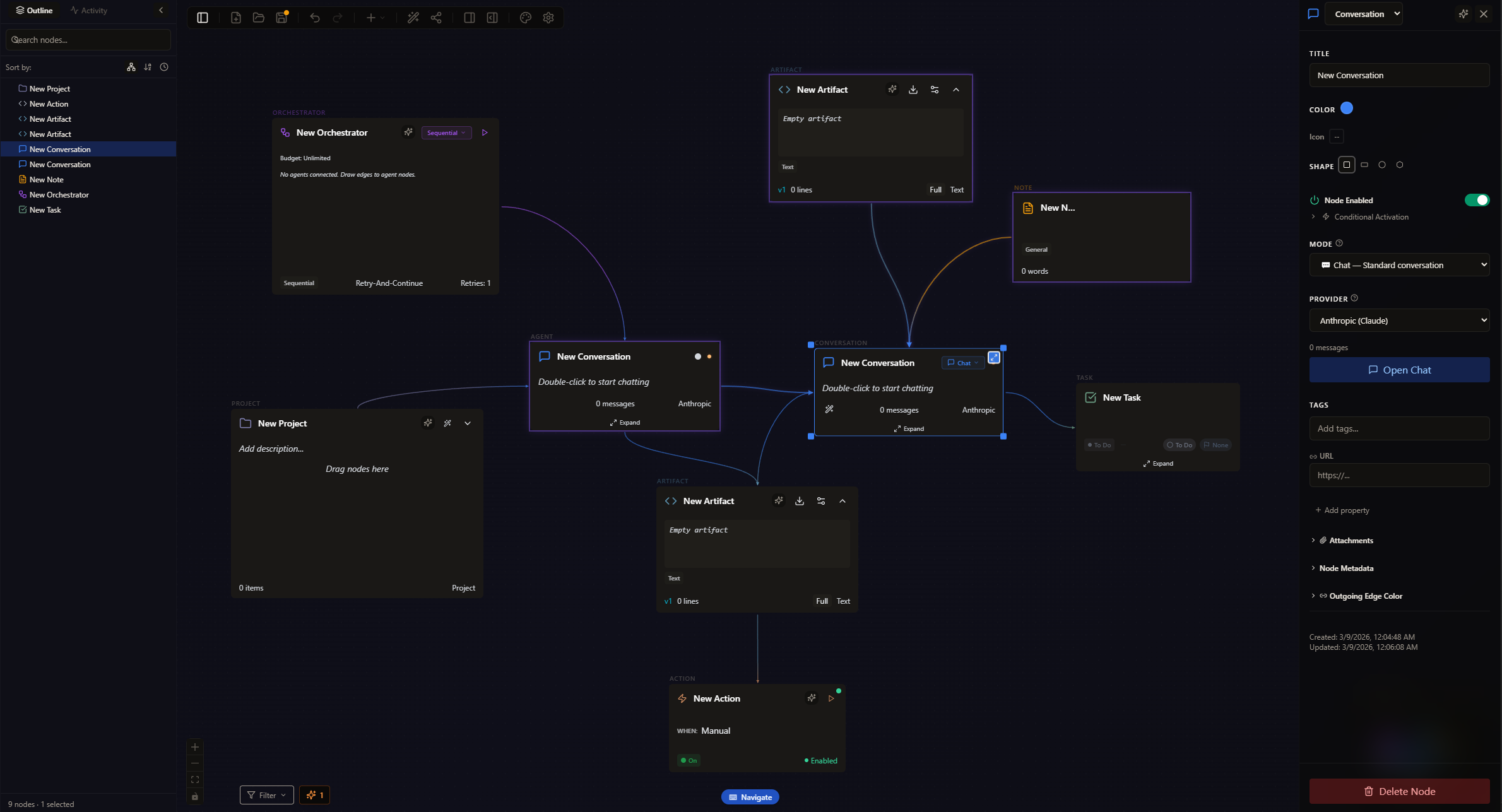
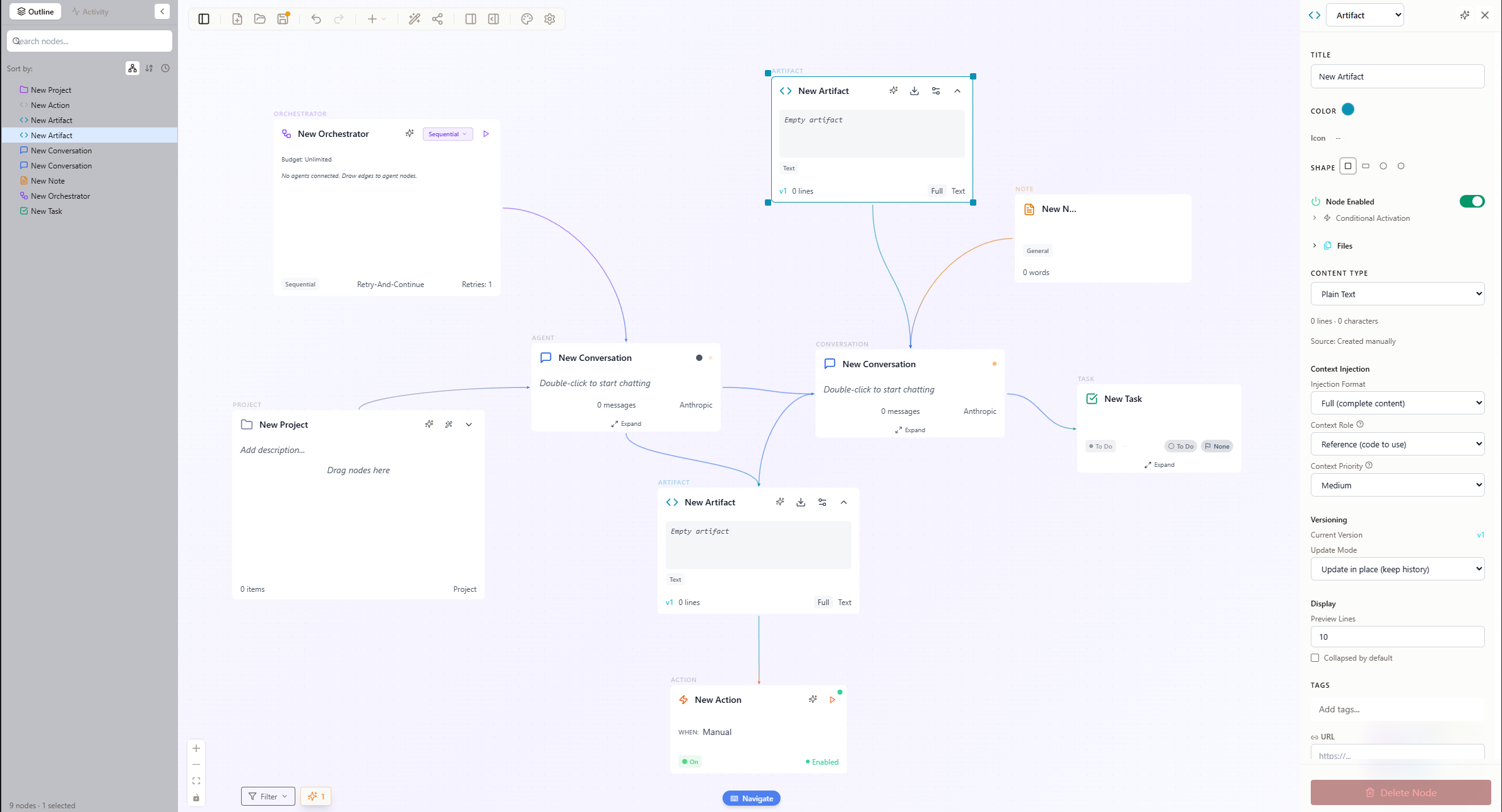
Perception-First Design isn’t just a consulting framework. I built the tooling to practice it. A spatial AI workflow canvas where you drop nodes, connect context, and trigger automations. Conversations, terminals, research, tasks, artifacts, and documents live as connected nodes on an infinite canvas, orchestrated visually instead of buried in chat threads.

Every PFD engagement runs through it. Nodes for each layer, edges that trace causal chains, AI-assisted analysis that surfaces the perception barriers you’d otherwise miss. Four provisional patents cover the spatial trigger mechanisms that make it work.

Learn more · Try the canvas · Open source (AGPL-3.0)

Spatial AI workflow canvas with connected nodes on infinite canvas, dark mode Spatial AI workflow canvas with connected nodes on infinite canvas, light mode

[Fe]

Forge

Perception-First Design™ Intelligence

Submit any design artifact (a URL, screenshot, HTML, or source directory) and Forge scores it across all five perception layers. Each round produces specific, actionable prescriptions grounded in the peer-reviewed research above. Iterate until you cross 85+.

Run it from Claude Code, any MCP-compatible client, the REST API, or the web app. The methodology, automated. Forge includes my calibration: practitioner-tuned scoring, leniency bias defenses, and correction layers from 15 years of applied work.

Want the framework without the calibration? The open source Claude Code skill gives you the full PFD methodology for free.

forge.aurochs.agency

forge converge
Round 3 of 4 · Score: 71 → est. 88

L0  92  Load within limits
L1         64  First impression needs work
L2         38  Fluency violations in nav + modal
L3         72  Bias optimization adequate
L4         88  Decision architecture strong

Five Evaluation Lenses

Every PFD engagement runs through five independent evaluations, each with its own scoring criteria and pass threshold. The lenses ensure nothing ships without being tested from every angle that matters.

Methodology Is the framework applied correctly and honestly sourced?
Value Exchange Will someone pay for this, and is the exchange fair both ways?
Operations Can this run sustainably without burning out the person operating it?
Technical Readiness Is this scoped correctly and ready to ship?
Perception How will a human actually experience this?

Each lens scores 5 criteria on a 0-100 scale. Work ships when all five converge above 70.

Get Started

Three ways in.

Apply it to your business, study the methodology, or run it in your own tools.

For Your Business

Strategic Partnership

from $3,000/mo

I apply the five layers to your product, market, and customers. Design, development, and perception strategy. One practitioner, one methodology, one bill.

See all services →
Learn the Methodology

The Complete Reference

Free

77 citations, five layers in full, the diagnostic protocol, 18 accumulated learnings, evidence tiers, framework comparisons, and the ethics treatment. No gate, no signup.

Read the full reference →
Use It in Your Tools

Claude Code Skill

Open Source

The full PFD framework as an AI skill. Run perception audits in your own workflow. Framework document, ADHD curb-cut extension, and accumulated learnings included.

View on GitHub →
Research Foundation

Selected citations.

CitationYearFindingLayer
Sweller1988Cognitive Load Theory (intrinsic vs. extraneous)L0
Kurosu & Kashimura1995Aesthetic-usability effectL1
Reber & Schwarz1999Processing fluency → perceived truthL2
Tractinsky, Katz & Ikar2000“What is Beautiful is Usable”L1
Norman2004Emotional Design (visceral, behavioral, reflective)Bonus
Lindgaard et al.200650ms visual appeal judgmentsL1
Thaler & Sunstein2008Choice architecture / Nudge theoryL4
Cowan2010Working memory capacity: 3–5 chunk limitL0
Friston2010Free-energy principleCore
Kahneman2011Thinking, Fast and Slow, System 1 / System 2Core
Clark2013Predictive processing: brains match input to top-down predictionsCore
Reinecke et al.2013Visual evaluation at 17ms (Google Research)L1
Sweller, van Merriënboer & Paas2019CLT reconceptualizedL0
Bujack, Teti, Miller, Turton & Rogers2022Perceptual color space is non-Riemannian: large color differences perceived as less than sum of small differencesL2

ADHD Cognitive Neuroscience

CitationYearFindingLayer
Mednick1962Flat associative hierarchies → more remote conceptual connectionsL2
Clark & Chalmers1998Extended Mind Thesis: cognition extends into reliably accessed toolsL4
Carson, Peterson & Higgins2003Eminent creative achievers 7× more likely to have low latent inhibitionL2
Dietrich2004Four types of creativity: deliberate/spontaneous × cognitive/emotionalCross
White & Shah2006, 2011ADHD adults outperform on divergent thinking, underperform on convergentCross
Eisenberg et al.2008DRD4/7R allele: opposite fitness outcomes depending on environmentL3
Kounios & Beeman2009Pre-problem brain state predicts insight vs. analytical solution modeL1
Beaty et al.2014Three-Network Model: creativity requires DMN + ECN + Salience cooperationCross
Barkley1997ADHD as self-regulation deficit; rules at point of performanceL0, L4
Castellanos et al.2002DMN hyperconnectivity in ADHDCross
Mark et al.2024Context switching costs “almost an hour” for ADHD developers (ICSE)L0
Dodson2005Interest-Based Nervous System (PINCH): Passion, Interest, Novelty, Competition, HyperurgencyL0
Mahan2020Wall of Awful: accumulated emotional barrier to task initiationL1
Taylor et al.2020ADHD = only positive predictor of divergent thinking (n=60)Cross
UK Dept. for Business and Trade202425% higher AI satisfaction among neurodivergent workersCross
JetBrains2023Low perceptual load specifically benefits ADHD-symptomatic developersL2
Newman & Begel202510.6% of programmers have ADHD (ICSE 2025)Cross
Deshmukh2025Neurodivergent-aware productivity: systems & AI-based human-in-the-loop framework for ADHD. arXiv:2507.06864Cross

32 shown. 78 peer-reviewed citations total at pfd-reference. Citation with attribution is welcome. Unauthorized commercial use requires written permission.

FAQ

Common questions.

What is Perception-First Design?

A web design methodology grounded in how the brain actually decides. Five layers: cognitive load, first impression, processing fluency, perception bias, decision architecture.

Each layer is a place where visitors can drop off before logic ever engages. Each layer has research behind it. Together they explain why two sites with the same product convert at different rates.

How is PFD different from UX design?

UX design tends to optimize for the conscious user. Tasks completed, paths clear, errors minimized.

PFD optimizes for the unconscious user. The decisions happening below logic, in the first 50 milliseconds, in the part of the brain that decides whether to stay or leave before reading anything. UX is the friction layer. PFD is the perception layer underneath it.

How is PFD different from CRO?

CRO is statistical. Test variants, measure lift, deploy the winner. PFD is causal. It tells you why one variant beat the other, not just that it did.

Most CRO programs hit a ceiling because they’re optimizing surface details. PFD digs into the cognitive layer that produced those numbers in the first place.

Does PFD actually improve conversions?

Yes. Best cases on record: 4x revenue (Vacuum Sealers Unlimited), 3x engagement (SSH). Smaller wins are typical inside 30 to 45 days.

The methodology promises a defensible reason for each design decision and a measurable outcome to track against.

Is PFD research-backed or just branding?

77 peer-reviewed citations across cognitive psychology, neuroscience, behavioral economics, and human factors research. Lindgaard, Reber, Schwarz, Kahneman, Sunstein, Thaler, Sweller. The full reference list lives on this site.

The methodology is my synthesis. The science it rests on is not.

Who is PFD for?

Designers and developers tired of design decisions that can’t be defended. Founders watching qualified traffic bounce. Marketing leads who keep getting CRO wins that don’t scale. Anyone whose product works but whose site is losing them sales they shouldn’t be losing.

Where does PFD come from? Who made it?

I built it. Stefan Kovalik. 15 years designing and developing for ecommerce, SaaS, and content sites. BA in Cognitive Psychology from UC Santa Barbara.

ASD and severe combined-type ADHD. The accommodations I needed for my own brain turned into a methodology that works for everyone. Trademarked 2026.

Is there a book I can read first?

Yes. Make Me Think. 12 chapters on the methodology. Free. Available at /writing/make-me-think/. Read it, decide if it makes sense, then we talk.

Can I learn PFD myself, or do I need to hire you?

Learn it yourself. The book is free. The reference site has the full framework.

Hire me when you want a partner shipping against it, or when the audit reveals you need someone in the trenches.